
Future of Airport Transfer for Modern and Hassle-Free Travel
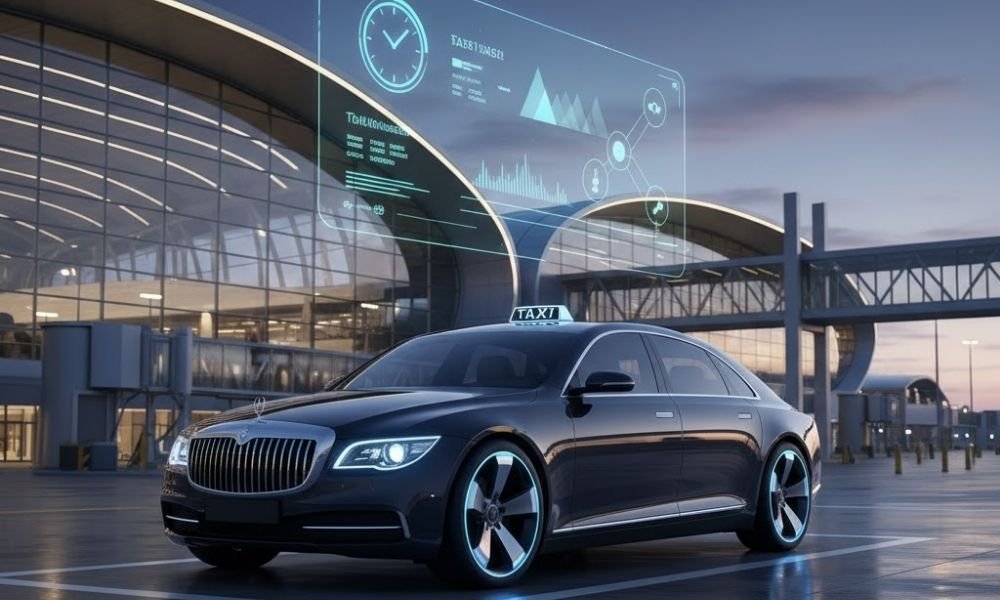
At a time when movement is increasingly becoming easy and fast, getting to and out of the airport is at the forefront of innovation. Due to the growing popularity of global air travel and estimates of a two-fold increase in demand by 2035, the airport transfer service is changing to suit the demands of technology-minded, environmentally aware travellers. The personalizations enabled by AI and electric vehicles that are sustainable will be a revolution in the way we move in and out of terminals to our destinations.
Rise of Self-Driving and Intelligent Taxi Systems
The use of AI-based autonomous vehicles is going to make the airport transfer process a comfortable, hands-free experience, which will prioritize safety and precision. The use of sensors, machine learning, and real-time information in these taxis allows them to negotiate routes, predict delays, and routes, and what was once science fiction is now a reality to travellers.
These systems are already in trial in places like Dubai and Las Vegas, but with human error being the cause of 90% of road accidents, they will be used to eliminate the element of error. The integration of AI enables changes on the fly, including rerouting, which is dependent on real-time updates broadcast by airports, which means that passengers are not stressed by having to drive.
Growth of Electric and Hybrid Fleets
The transition to electric and hybrid cars in Manchester Airport Taxis denotes a long-term sustainable approach to airport transfer of services without jeopardizing comfort and reliability. Electric cars (EVs) and hybrids are rapidly replacing cars in the fleet of airport transfer providers to make the world a sustainable place of movement. This change has not happened only in Europe, but in the Asian world, the biggest airports in the region have been pushing their governments to electrify ground transport to minimize carbon emissions and in accordance with their green policies.
As an example, the aggressive electrification policy of China plans to make 60 percent of taxis in major cities electric by 2026, which would affect the work of the airports throughout the country. These transformations bring a number of benefits to provide a more efficient, cleaner future of travel.
Plastic Cost and Environmental Benefits
With a transition to EVs and hybrids, the services can reduce greenhouse gas emissions by up to half in contrast to the conventional fuels, and contribute to overall climate objectives in such areas as the Asia-Pacific, where the number of green airport fleets is growing with the increase of environmental concerns. On the economic front, reduced energy and maintenance costs lead to savings, which allow competitive fares and long-term sustainability by the operators.
Obstacles to Overcome
There are no problems implementing this fleet expansion, such as significant initial investment and the implementation of charging networks at airports. Governments in Asia, where fast urbanization is increasing demand, are intervening by providing subsidies to soften such barriers, as in the case of a gradual process of urban taxi electrification in China.
Projections and Growth
The electric taxi market in Asia will experience explosive growth, where market value is expected to increase at a 14 percent per year pace between the years 2021 and 2035, owing to policy incentives and technological changes. Worldwide, such as at the UK airports, such as Heathrow, the majority of the transfer vehicles will be electric or hybrid by the end of the decade, transforming the way passengers take environmentally friendly trips.
Optimizing the Booking Process
The current platforms are based on user-friendly interfaces and artificial intelligence algorithms to suggest the most appropriate vehicle choices depending on the flight specifications, number of passengers, and inclinations.
Safe and Convenient Payment Methods
The days when money was used to ride are apocalyptic; nowadays, there exist digital wallets, cryptocurrencies, and group split payments. Fraud is prohibited by advanced encryption and biometric checks, and dynamic prices provide savings in slow hours by changing the fares according to demand.
Connectivity to Heavier Travel Ecosystems
These systems are linked to loyalty programs and travel aggregators, where frequent users are rewarded with discounts and earn points across services. The unified travel experience between booking and arrival in the destination is not only achieved by simplifying payments, but also through this holistic approach.
Sustainability and Eco-Friendly
The key to airport transfer in the future is a promise to be environmentally friendly. In addition to electricity-powered airport taxis, some of the services are taking up biofuels, hydrogen-powered cars, and carbon offset schemes. Airports are also offering prime parking spaces and lowering fees to green providers to induce a shift towards the use of fossil fuels.
This is being fuelled by traveller preferences: Surveys indicate that 70 percent of passengers are going to seek sustainable options at the time of booking transfers. This has seen the development of new technologies such as solar-powered charging stations and waste-minimizing efforts in vehicles. These practices are long-term and meet the regulations, as well as appeal to environmentally conscious consumers, which increases brand loyalty.
What’s Next for Airport Transfers
Within the scope of the future, there are a number of future trends of airport transfer services that will transform the industry. Data analytics will enable services to offer personalization to users, i.e. group size-based vehicle recommendations or luxury preferences. Development of subscription plans, such as ride-share passes, may arise in the case of frequent fliers, which will give them a discounted price and give them greater priority.
It is near integration with urban air mobility (UAM), whereby electric vertical takeoff and landing (eVTOL) vehicles could be used to supplement ground transfers to provide ultra-fast connections within the city. Meanwhile, blockchain can be used to make bookings and payments that will ensure transparency and the prevention of fraud.
The concept of sustainability is not a one-sided issue for EVs, and shared mobility also includes reducing the number of vehicles on the streets. Applications that would assist people in travelling to airports by car might lessen the number of people and spending. Moreover, there may be augmented reality (AR) in the apps that would help passengers choose pickup points using virtual maps on phones.
Related Articles
